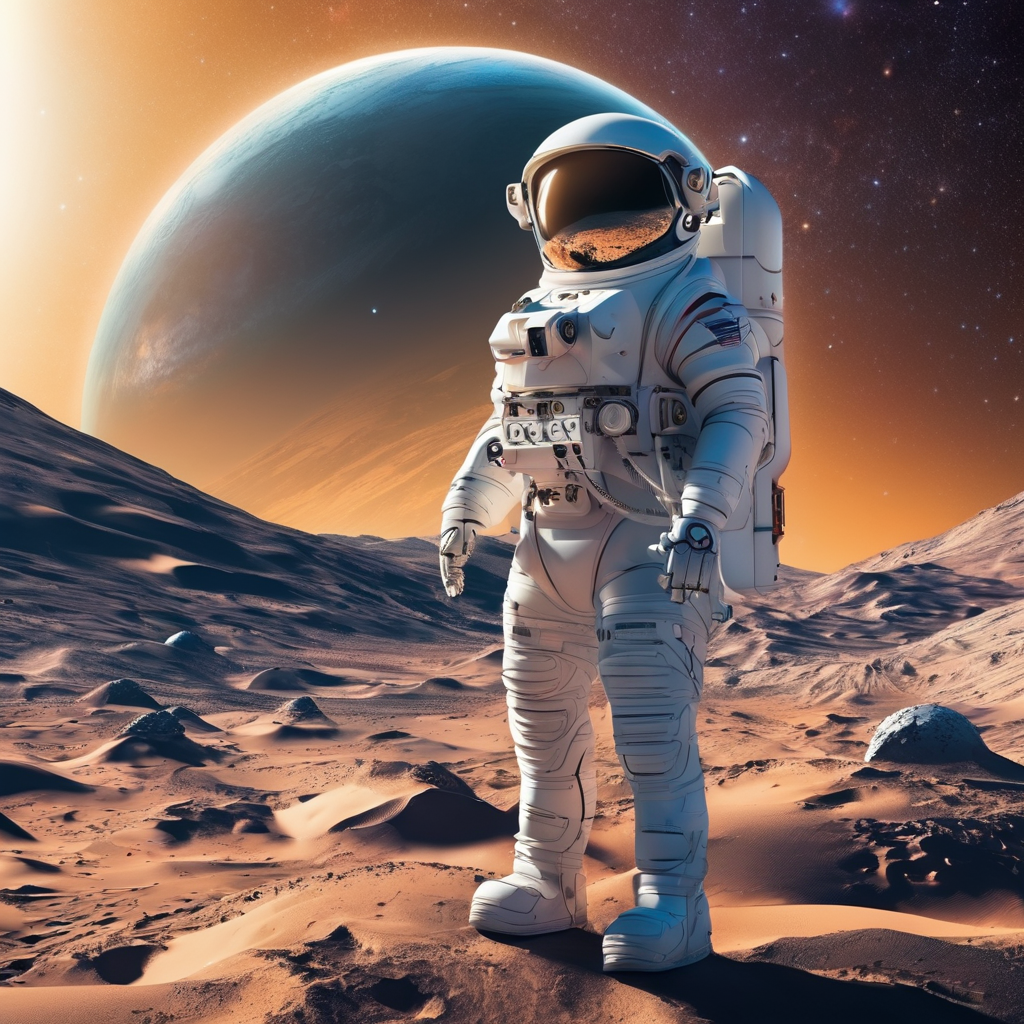
Artificial intelligence (AI) has long been at the forefront of technological advancements, revolutionizing various industries. In the realm of space exploration, AI is poised to play a pivotal role in shaping the future of missions beyond Earth’s atmosphere. With rapid advancements in AI capabilities, the integration of artificial intelligence in space exploration holds the potential to unlock new frontiers, enhance efficiency, and overcome challenges that have limited human exploration of space.
One of the key areas where AI is making significant contributions to space exploration is in autonomous spacecraft operations. AI-powered systems can analyze vast amounts of data in real-time, allowing spacecraft to make split-second decisions without human intervention. This capability is crucial for missions that require quick responses to unforeseen obstacles or changing conditions in space.
Moreover, AI is revolutionizing the way space missions are planned and executed. By leveraging machine learning algorithms, AI systems can optimize mission trajectories, predict potential hazards, and even discover new celestial bodies. This not only enhances the success rate of space missions but also reduces costs and minimizes risks associated with human error.
In addition to autonomous operations and mission planning, AI is also transforming the way space data is collected and analyzed. Machine learning algorithms can sift through massive datasets gathered by satellites and rovers, identifying patterns, anomalies, and valuable insights that may have otherwise gone unnoticed. This data-driven approach enables scientists to make groundbreaking discoveries and deepen our understanding of the universe.
Furthermore, AI is playing a crucial role in enabling communication between Earth and spacecraft in deep space. By leveraging AI-powered communication systems, space agencies can overcome the challenges of vast distances and signal delays, ensuring seamless and reliable communication with astronauts and robotic missions exploring distant worlds.
Another frontier where AI is making strides in space exploration is in the development of autonomous robots and drones for extraterrestrial exploration. These AI-powered machines can navigate harsh and unpredictable terrains on other planets, conduct scientific experiments, and even assist in the construction of habitats for future human missions.
Moreover, AI is facilitating the discovery of new exoplanets and potentially habitable worlds beyond our solar system. By analyzing data from telescopes and space observatories, AI algorithms can identify planetary systems that may harbor life, providing valuable insights for future missions aimed at studying alien worlds and searching for signs of extraterrestrial life.
Furthermore, AI is revolutionizing space research by enabling the development of sophisticated simulations and models to study complex phenomena such as black holes, dark matter, and the origins of the universe. These AI-driven simulations help scientists unravel the mysteries of the cosmos and push the boundaries of human knowledge in ways that were previously unimaginable.
Additionally, AI is enhancing the safety and security of astronauts during space missions by monitoring their health, predicting potential health issues, and providing real-time medical assistance in emergencies. AI-powered healthcare systems onboard spacecraft can ensure the well-being of astronauts during long-duration missions to space.
In conclusion, the future of AI in space exploration is brimming with possibilities and promises to revolutionize the way we explore and understand the cosmos. By harnessing the power of artificial intelligence, space agencies and researchers can push the boundaries of human knowledge, discover new worlds, and pave the way for future generations to venture into the great unknown. The integration of AI in space exploration represents a giant leap forward in our quest to unravel the mysteries of the universe and unlock the secrets of the cosmos.